How much a polo shirt will shrink is not a matter of technique. It is decided before you touch it, by what the shirt is made of and whether the fabric was pre-shrunk at the mill.
Get that part right and the methods below are straightforward. Get it wrong and you will either damage a shirt that was never going to move, or be disappointed by one that had already done its shrinking before you bought it.
What’s Inside
How Much Can a Polo Shirt Actually Shrink?
Pre-Shrunk Fabric Has Already Moved
This is the fact that decides everything, and almost no article on the subject mentions it. A fabric described as pre-shrunk has been processed so that it is expected to shrink less than 3% in either direction in standard wash tests.
Sanforization — the compressive pre-shrinking process developed by Sanford Cluett in 1930 — goes further still, with sanforized fabric labeled at residual shrinkage figures as low as under 1%.
So if your polo is pre-shrunk cotton, the realistic ceiling is a couple of percent. On a 40-inch chest that is under an inch of circumference. It is not a size.
Fiber Content Sets the Range
| Composition | What to expect |
|---|---|
| 100% untreated cotton | The most movement available; the only realistic candidate |
| 100% pre-shrunk cotton | Under 3% by design |
| 60/40 or 50/50 cotton blend | Roughly half a cotton shirt’s movement, from the cotton portion only |
| 100% polyester | Effectively none — polyester is dimensionally stable |
| Cotton with 3–6% elastane | Do not attempt; heat degrades elastane permanently |
Check the label before doing anything. If it says polyester, stop — you will damage the shirt long before you resize it. The compositions across common polo brands are listed in the polo shirt fabric guide.
Three Methods, in Order of Control
Method 1: Hot Wash and Warm Dry
The controllable option, and the one to use first. Wash on the hottest setting the care label allows — the dots are specific temperatures, and four dots means 60°C — then tumble dry on medium.
Heat causes cotton fibers to contract; the tumbling accelerates it. Check the fit after one cycle rather than assuming, because the first cycle produces most of the movement you are going to get.
Repeat once if needed. Beyond two cycles you are damaging the fabric rather than shrinking it.
Method 2: Boiling Water Soak
More aggressive and less controllable. Boil water, take it off the heat, submerge the shirt for five to ten minutes, then remove it carefully and let it cool before handling.
This produces the most shrinkage available from a cotton polo, and it produces it unevenly — the collar and placket, being denser, move differently from the body. Use it only on a shirt you are prepared to lose.
Method 3: Targeted Heat on One Area
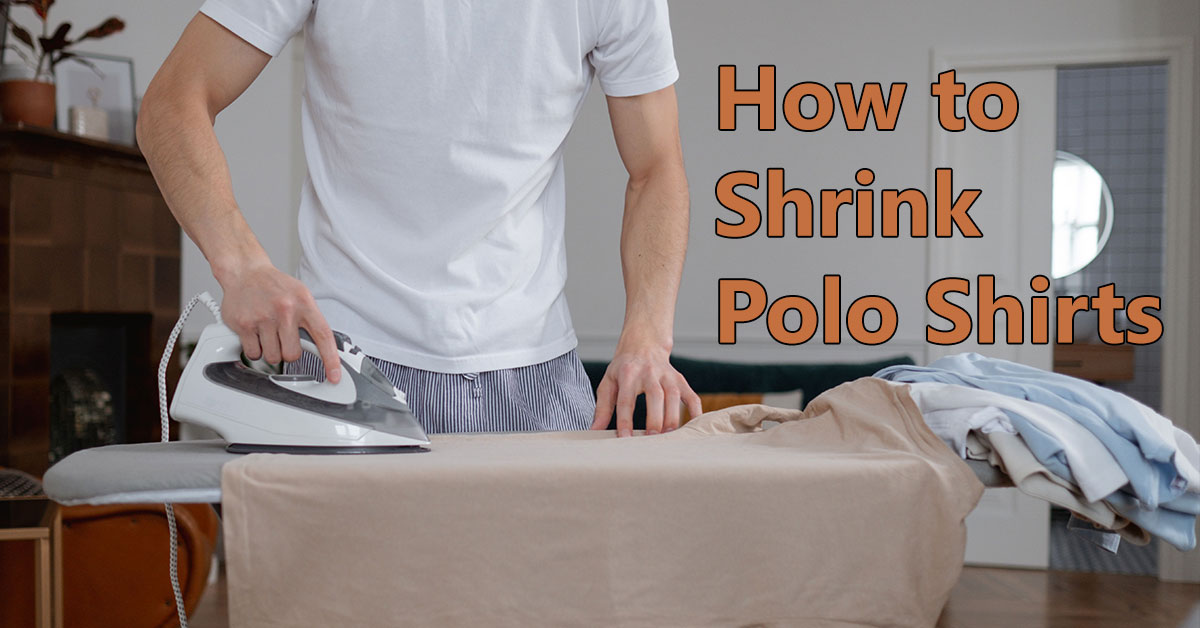
For a specific problem — a stretched collar, a loose cuff — dampen only that area and apply a warm iron through a pressing cloth, working the fabric gently inward as it dries.
This is the only method that does not resize the whole garment, which makes it the right one when the shirt fits everywhere except one place.
Shrinking a Branded Polo Shirt
The most common version of this question is about a specific brand, and the answer is always the same: look up that shirt’s composition, then apply the table above.
A Ralph Lauren mesh polo, a Lacoste L.12.12 and a Fred Perry M3600 are all cotton and all candidates. A Nike Dri-FIT, an Under Armour Tech polo or a Callaway Core Performance is polyester and none of them will move. A Tommy Hilfiger slim polo contains elastane, so heat will damage the stretch before it changes the size.
Brand name tells you nothing on its own. Composition tells you everything.
When Not to Shrink at All
Shrinking reduces every dimension at once, and it reduces length more visibly than width because the body panel is longer than it is wide. A shirt that is loose at the waist but correct at the shoulder will come out short before it comes out fitted.
If the chest fits and the hem billows, that is a cut problem rather than a size problem — the shirt was drafted for a different chest-to-waist difference. The polo shirt fit guide explains how to identify it, and best polo shirts for skinny guys lists shirts cut for a narrow frame.
And if you are trying to shrink a shirt because it stretched, the fix is usually washing habits rather than heat. That is covered in how to wash polo shirts.
Shrinking Polo Shirts FAQ
How much will a cotton polo shirt shrink?
If it is pre-shrunk, under 3% by design — and sanforized fabric can be under 1%. Only untreated cotton moves enough to notice, and even then it is a fraction of a size rather than a size.
Can I shrink a polyester polo shirt?
No. Polyester is dimensionally stable and will not shrink meaningfully. Heat high enough to affect it will damage or glaze the fabric first.
Will shrinking affect the color?
Yes. The heat that shrinks cotton also accelerates dye loss, and dark colors show it most. Expect some fading alongside any size change.
Can I shrink just the sleeves or the collar?
Yes, using targeted damp heat with an iron and a pressing cloth. It is the only approach that does not resize the whole garment.
Can a shrunk polo shirt be stretched back?
Partly, while damp, by gently pulling it back to shape and drying it flat. Cotton that has been repeatedly heat-shrunk does not fully recover.
Does a cotton-polyester blend shrink?
Some, in proportion to the cotton content. A 60/40 blend moves noticeably less than pure cotton and a 50/50 less again.
Final Thoughts on Shrinking Polo Shirts
Read the composition label before you boil anything. Pre-shrunk cotton is built to move less than 3% and polyester will not move at all — so on most modern polos the honest answer is that shrinking will not solve the problem, and buying the right cut will.